
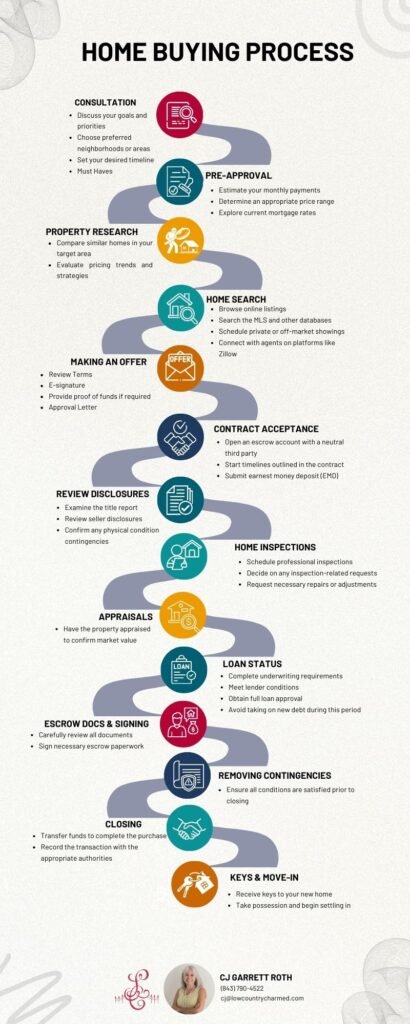
Buying a home is more than just a transaction — it’s a journey filled with important decisions, negotiations, and milestones. Whether you’re a first-time buyer or purchasing your next investment, understanding the process will help you move forward with confidence.
Here’s a detailed look at the 14 essential steps of the home buying process:
- Consultation: Defining Your Vision
The journey begins with a consultation with your real estate agent. This is where you get crystal clear on what you’re looking for. Together, you’ll discuss:
- Your needs and lifestyle: Do you need extra bedrooms, a home office, or a big backyard?
- Preferred locations: Neighborhoods, school districts, proximity to work, or community amenities.
- Timeline: Are you hoping to buy within the next 30 days, or do you have more flexibility?
- Must-haves vs. nice-to-haves: Separating essentials (like number of bedrooms) from preferences (like a pool).
This step is about creating a roadmap that ensures your home search is targeted and efficient.
- Pre-Approval: Establishing Your Budget
Before touring homes, it’s crucial to understand your financial position. A mortgage pre-approval will:
- Determine your monthly payment comfort zone based on income, credit, and debt.
- Set your price range so you don’t waste time on homes outside your budget.
- Show sellers you’re serious, since a pre-approval letter strengthens your offer.
- Lock in interest rates (in some cases) so you’re protected if rates rise.
Pro tip: Avoid making big financial moves (like buying a car or changing jobs) until after closing.
- Searching for Homes: Exploring Your Options
With your budget set, the home search begins! You and your agent will:
- Browse MLS listings and other online platforms.
- Tour off-market homes and attend private showings.
- Compare different neighborhoods for commute times, schools, and amenities.
- Use tools like Zillow or your agent’s website to track and save favorites.
This is the exciting part — where you begin to see your dream home take shape.
- Identifying Properties: Doing the Homework
Once you’ve found homes you love, your agent will dig deeper by:
- Pulling comparable sales (comps): What have similar homes in the area recently sold for?
- Crafting pricing strategies so you don’t overpay in a competitive market.
- Reviewing the home’s history (days on market, past sales, or price reductions).
This step ensures your offer is backed by data, not emotions.
- Writing the Purchase Offer: Making Your Move
When you’re ready to buy, your agent will prepare and submit an offer that includes:
- Purchase price and terms (closing date, contingencies, etc.).
- Pre-approval letter and proof of funds (for the down payment).
- E-signatures to speed up the process.
- Negotiation strategies to increase your chances of acceptance.
A strong offer balances competitiveness with protection of your interests.
- Contract Acceptance: Entering Escrow
If the seller accepts your offer, you move into escrow — a neutral stage where a third party manages funds and documents. During this time:
- Escrow is officially opened.
- Earnest money deposit (EMD) is submitted, showing good faith.
- Timelines begin, starting the countdown to inspections, disclosures, and closing. Escrow acts as a safety net for both buyer and seller.
- Disclosures: Reviewing the Details
Sellers are legally required to disclose important information about the property. You’ll receive:
- Title report: Confirms ownership and identifies liens or issues.
- Seller’s disclosures: Known repairs, renovations, or property conditions.
- Physical contingency: Opportunity to withdraw if major problems are found.
Read disclosures carefully — they give you a full picture of the home before moving forward.
- Inspections: Looking Under the Hood
Inspections help uncover hidden issues that may not be visible during a tour. This typically includes:
- General home inspection (roof, plumbing, electrical, foundation, etc.).
- Specialty inspections (pest, mold, radon, or sewer, depending on location).
- Repair requests: If issues are found, you can negotiate repairs or credits.
This step gives you peace of mind and protects your investment.
- Appraisal: Confirming Value
Your lender requires an appraisal to ensure the home’s price is fair. The appraiser will:
- Compare the home to recent sales in the area.
- Evaluate its condition, location, and features.
- Provide an estimated market value.
If the appraisal comes in lower than the offer price, renegotiation may be necessary.
- Loan Status: Securing Financing
Your loan enters its final stages of approval, including:
- Underwriting: A detailed financial review.
- Meeting conditions: Providing extra documents if requested.
- Full approval: The lender gives the green light to proceed.
Reminder: Do not take on new debt or make big purchases until after closing!
- Removing Contingencies: Committing Fully
Once inspections, appraisal, and financing are settled, you’ll remove all contingencies. This signals you’re fully committed to completing the purchase.
- Escrow Documents & Signing: The Legal Wrap-Up
Next, you’ll review and sign the final escrow paperwork. This includes:
- Loan documents
- Closing disclosure (final breakdown of costs)
- Title transfer papers
This step makes everything official — you’re almost at the finish line.
- Closing: Making It Official
On closing day:
- Your lender funds the loan.
- Escrow distributes funds to the seller.
- The sale is recorded with the county.
At this point, you are legally the homeowner!
- Keys + Possession: Welcome Home!
The final (and most exciting) step: you receive your keys and can move into your new home.
The home buying process may feel like a marathon, but every step serves an important purpose. From pre-approval to closing, your agent and lender are there to guide you, protect your interests, and make sure the journey ends with you walking into the perfect home.
Buying a home isn’t just a financial transaction — it’s about creating a foundation for your future. With the right guidance and preparation, the process can be smooth, successful, and even enjoyable.